Abhishek Singh | SEO & CRO Consultant | 6+ Years of Experience
The best AI SEO tools in 2026 go beyond generating blog posts. They now support keyword research, content optimization, technical SEO, SEO audits, rank tracking, competitor analysis, and visibility monitoring across AI search platforms such as Google AI Overviews, ChatGPT and Perplexity.
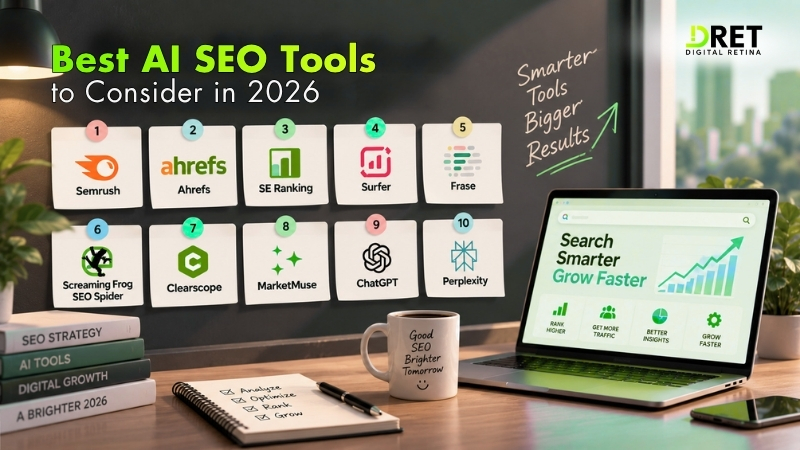
For most businesses, Semrush, Ahrefs, SE Ranking, Surfer, Frase, Screaming Frog SEO Spider, Clearscope, MarketMuse, ChatGPT, Perplexity, Originality.ai and OtterlyAI are useful options for different SEO requirements. The right choice depends on whether you need an all-in-one SEO platform, content optimization, technical auditing, or AI search visibility tracking.
As an SEO and CRO consultant, I recommend starting with the SEO problem rather than the tool. A business that needs technical auditing should not choose software primarily because it has strong AI writing features, while a content team may not need an expensive technical SEO platform for every workflow.
Quick Comparison of the Best AI SEO Tools in 2026
|
Tool |
Best for |
Starting price* |
Free option |
|
Semrush |
SEO + AI visibility |
$139.95/mo |
Limited/free tools |
|
Ahrefs |
Keywords, backlinks |
$29/mo |
Yes |
|
SE Ranking |
SEO + GEO + rank tracking |
$103.20/mo annually |
14-day trial |
|
Surfer |
Content optimization |
Check current plan |
Options vary |
|
Frase |
Content research and optimization |
Check current plan |
Options vary |
|
Screaming Frog |
Technical SEO audits |
£199/year |
Yes, up to 500 URLs |
|
Clearscope |
Content optimization + AI search |
$129/mo |
14-day trial |
|
MarketMuse |
Content strategy |
Free plan available |
Yes |
|
ChatGPT |
SEO research and workflows |
Free/paid plans |
Yes |
|
Perplexity |
Research and source discovery |
Free/paid plans |
Yes |
|
Originality.ai |
AI detection + plagiarism checks |
$14.95/mo |
Yes |
|
OtterlyAI |
AI search visibility tracking |
$29/mo |
Free tier/trial |
Prices can change by billing cycle, region, usage limits and plan structure. AI visibility features may also be sold separately or vary by subscription tier. Always verify the current vendor pricing before purchasing.
What Are AI SEO Tools?
AI SEO tools are software platforms that use artificial intelligence, machine learning, automation or large language models to support different parts of the SEO process.
Depending on the platform, they can help with:
-
Keyword research: Find search opportunities, related queries and keyword clusters.
-
Content optimization: Identify topics, entities, terms and content gaps.
-
Technical SEO: Crawl websites and identify issues affecting crawling, indexing or performance.
-
SEO audits: Analyze technical and on-page signals at scale.
-
Rank tracking: Monitor keyword positions across search engines and locations.
-
Competitor research: Compare rankings, backlinks, content and search visibility.
-
AI search optimization: Monitor how brands appear in AI-generated answers and search experiences.
-
Content quality checks: Review originality, plagiarism and other content-quality signals.
The main benefit is not simply automation. AI SEO tools help SEO teams process larger amounts of data and identify patterns faster, while human judgment is still needed to validate recommendations and connect SEO activity to business goals.
12 Best AI SEO Tools to Consider in 2026
1. Semrush
Best for: All-in-one SEO and AI search visibility.
Semrush combines keyword research, competitor analysis, site auditing, rank tracking, content tools and AI search capabilities in one platform. It is useful for teams that want to manage traditional SEO and newer AI-search visibility workflows from the same ecosystem.
Its SEO Toolkit starts at $139.95/month. However, businesses should not assume that the full AI Visibility Toolkit is included with that base SEO subscription. Semrush also offers AI Visibility as a separate toolkit, while newer bundled plans combine SEO and AI search capabilities.
Key strengths:
-
Keyword and competitor research
-
Site Audit and technical SEO analysis
-
Position Tracking
-
Content and SEO workflow support
-
AI search visibility capabilities through applicable plans or toolkits
Potential limitation: The wider Semrush ecosystem can become expensive as you add specialized toolkits, users or higher usage limits.
Choose it if: You want a broad SEO platform and expect your workflow to expand into AI search visibility.
Practitioner note: In a client workflow, I would use Semrush for the initial competitive and technical picture, but I would still validate important recommendations against Google Search Console, the live SERPs and the website's actual conversion data.
2. Ahrefs
Best for: Keyword research, backlinks and competitor analysis.
Ahrefs is widely used for keyword research, backlink analysis, competitor research, content discovery and SEO performance analysis. Its Starter plan starts at $29/month, making it accessible for smaller projects that need core SEO research capabilities.
Ahrefs also offers AI visibility capabilities through Brand Radar, but Brand Radar is separate from the $29/month Starter plan. Businesses specifically looking for AI visibility tracking should check the additional cost and availability before choosing it for that purpose.
Key strengths:
-
Keyword research
-
Backlink analysis
-
Competitor research
-
Content and search opportunity discovery
-
Optional AI visibility capabilities
Potential limitation: Advanced usage and AI visibility features can increase the overall cost.
Choose it if: Backlinks, competitor analysis and keyword research are central to your SEO workflow.
Practitioner note: I would treat Ahrefs as a research and validation platform rather than using its keyword suggestions in isolation. The strongest workflow is to compare its opportunities with actual Search Console queries, search intent and commercial relevance.
3. SE Ranking
Best for: Growing businesses, agencies and combined SEO/GEO workflows.
SE Ranking provides keyword research, rank tracking, website auditing, competitor analysis and other SEO functions in one platform. Its current Core plan also supports daily keyword and AI prompt tracking, making it relevant for teams that want to monitor both traditional rankings and emerging AI search visibility.
Key strengths:
-
Keyword and competitor research
-
Rank tracking
-
Website audit
-
AI prompt tracking
-
GEO and AI search workflows
Potential limitation: Users managing very large websites, keyword sets or multiple clients may need a higher plan as their tracking requirements grow.
Choose it if: You want traditional SEO and AI-search tracking in a single workflow without building a large collection of separate tools.
4. Surfer
Best for: AI-assisted content optimization.
Surfer focuses heavily on content optimization. It can help writers and SEO teams understand the topics, terms and content patterns associated with a target search query.
It is especially useful during the optimization stage, when the primary topic and search intent are already clear.
Key strengths:
-
Content optimization
-
SERP-based content analysis
-
Content planning support
-
AI-assisted writing workflows
-
Topic and keyword recommendations
Potential limitation: Optimization scores should not become the only measure of content quality. Search intent, expertise, originality and usefulness still matter.
Choose it if: Your SEO program publishes a significant amount of content and needs a structured optimization workflow.
Practitioner note: For content-heavy SEO campaigns, I would use a tool like Surfer after identifying the target query and intent, rather than allowing optimization recommendations to determine the entire article.
5. Frase
Best for: SEO content research and optimization.
Frase combines content research, topic analysis, briefs and optimization features. It can help teams move from a search query to a structured content outline and then optimize the resulting page.
Key strengths:
-
Content briefs
-
SERP and topic research
-
Content optimization
-
AI-assisted content workflows
-
Research support
Potential limitation: AI-generated drafts still require human editing, fact-checking and brand-specific expertise.
Choose it if: You want a content-focused platform that connects research, briefing and optimization.
6. Screaming Frog SEO Spider
Best for: Technical SEO audits.
Screaming Frog SEO Spider is a crawler that helps SEO professionals analyze websites for technical issues. It can identify broken links, redirects, metadata problems, duplicate content and many other technical signals.
The free version can crawl up to 500 URLs, while the paid licence is £199 per year.
Key strengths:
-
Technical website crawling
-
Broken link detection
-
Redirect analysis
-
Metadata and indexability checks
-
Large-scale technical audits
Potential limitation: It is primarily a technical SEO crawler rather than a complete all-in-one AI SEO platform.
Choose it if: Technical SEO and website auditing are major parts of your work.
Practitioner note: For technical audits, I would not rely on an AI-generated summary alone. I use crawler findings as evidence, then prioritize issues according to their impact on crawling, indexing, user experience and business-critical pages.
7. Clearscope
Best for: Content optimization and AI search visibility.
Clearscope focuses on content optimization, topic exploration and content workflows. Its current Essentials plan includes content pages, topic exploration and AI-related search visibility capabilities.
It can help content teams understand what topics and concepts should be covered while creating or improving a page.
Key strengths:
-
Content optimization
-
Topic exploration
-
Content planning
-
AI-assisted content workflows
-
AI search visibility capabilities
Potential limitation: It is more focused on content than on deep technical SEO or backlink analysis.
Choose it if: Content quality and topical coverage are major parts of your SEO strategy.
8. MarketMuse
Best for: Content strategy and topic planning.
MarketMuse focuses on content strategy, topic modeling and identifying opportunities across a website. It can help teams understand which topics deserve attention and how individual pages fit into a broader content strategy.
Key strengths:
-
Topic planning
-
Content strategy
-
Topic modeling
-
Content gap analysis
-
Content prioritization
Potential limitation: It may be more than a small website needs if the primary requirement is basic keyword research or simple content optimization.
Choose it if: You manage a large content library and need a strategic approach to topical coverage.
9. ChatGPT
Best for: SEO research, analysis and workflow assistance.
ChatGPT can support many SEO workflows, including keyword clustering, content outlining, search-intent analysis, content briefs, internal-linking ideas, data interpretation and repetitive SEO tasks.
It works best when it is connected to reliable source data rather than being treated as the source of truth for search volume, rankings or website performance.
Key strengths:
-
Keyword clustering
-
Content outlines and briefs
-
Search-intent analysis
-
Data analysis
-
Workflow automation and ideation
Potential limitation: AI-generated information can be incomplete or inaccurate, so important SEO decisions should be checked against first-party data and reliable sources.
Choose it if: You want flexible AI assistance across multiple SEO workflows.
Practitioner note: I use general AI assistance most effectively for the work surrounding SEO data, not as a replacement for the data itself. For example, an AI assistant can cluster a keyword export or identify patterns, while Search Console or an SEO platform supplies the underlying data.
10. Perplexity
Best for: Research and source discovery.
Perplexity is useful for researching topics, discovering sources and exploring questions through an AI-generated answer format. For SEO teams, it can help identify how a topic is discussed across different sources and uncover research material for content development.
Key strengths:
-
Research
-
Source discovery
-
Topic exploration
-
Competitive research support
-
Question-based content research
Potential limitation: Sources and claims should still be checked before being used in published content.
Choose it if: Research and source discovery are important parts of your content workflow.
11. Originality.ai
Best for: AI detection, plagiarism checks and content-quality workflows.
Originality.ai provides tools for plagiarism checking, AI-content detection and other content-quality workflows. It can be useful for agencies, publishers and teams that review content from multiple writers or contributors.
Key strengths:
-
Plagiarism checking
-
AI-content detection
-
Content quality workflows
-
Publishing-team review support
Potential limitation: AI detection should not be treated as definitive proof of how a piece of content was created.
Choose it if: Your team needs an additional content review layer before publication.
12. OtterlyAI
Best for: AI search visibility tracking.
OtterlyAI is designed specifically around AI search monitoring. Its Lite plan starts at $29/month and supports tracking across platforms such as ChatGPT, Google AI Overviews, Perplexity and Microsoft Copilot, with additional platforms available through add-ons.
This makes it useful for businesses that want to monitor whether their brand or content is being mentioned in AI-generated search experiences.
Key strengths:
-
AI search visibility tracking
-
Prompt monitoring
-
Brand mention tracking
-
Competitor visibility monitoring
-
Support for multiple AI search platforms
Potential limitation: It is more specialized than a traditional all-in-one SEO platform.
Choose it if: AI visibility tracking is a primary requirement rather than a secondary SEO feature.
Which AI SEO Tools Are Best for Different SEO Tasks?
The best AI SEO tool depends on the specific task you need to complete.
|
SEO task |
Useful tools |
|
Keyword research |
Ahrefs, Semrush, SE Ranking |
|
Content writing |
ChatGPT, Frase |
|
Content optimization |
Surfer, Clearscope, Frase |
|
Technical SEO |
Screaming Frog, Semrush, Ahrefs |
|
SEO audits |
Screaming Frog, Semrush, SE Ranking |
|
Rank tracking |
Ahrefs, Semrush, SE Ranking |
|
Content strategy |
MarketMuse, Clearscope, Frase |
|
AI search optimization |
Semrush, Ahrefs, SE Ranking |
|
AI visibility tracking |
Ahrefs Brand Radar, Semrush, OtterlyAI |
|
SEO research |
Perplexity, ChatGPT, Ahrefs |
|
Plagiarism/content checks |
Originality.ai |
|
Free SEO workflows |
Google Search Console, Google Trends, Screaming Frog |
The important point is that these tools overlap, but they are not interchangeable. A technical SEO audit, content optimization project and AI visibility campaign require different types of data.
How Do AI SEO Tools Help With AI Search Optimization?
AI SEO tools can help businesses understand how their content and brand appear across newer search experiences such as Google AI Overviews, ChatGPT and Perplexity.
They can support AI search optimization by helping teams:
-
Identify important topics and questions that users are searching for.
-
Improve content depth and topical coverage around those subjects.
-
Monitor brand mentions and citations in AI-generated answers.
-
Compare AI visibility with competitors where the platform provides that data.
-
Find content gaps that may limit visibility across traditional and AI search.
-
Track changes over time rather than treating AI visibility as a one-time optimization task.
Google has also stated that its existing SEO fundamentals continue to apply to AI Overviews and AI Mode. That means businesses should not treat AI search optimization as a completely separate replacement for SEO.
Technical accessibility, useful content, clear information architecture, strong internal linking, trustworthy sources and good user experience remain important.
A Practical AI SEO Workflow
A practical AI SEO workflow can combine several tools instead of depending on one platform.
Step 1: Research the search opportunity
Use Ahrefs, Semrush or SE Ranking to identify keywords, competitors and search opportunities.
Step 2: Understand the search intent
Review the current SERPs and related questions. Use ChatGPT or Perplexity to help organize patterns, but validate important conclusions against live search results.
Step 3: Build the content plan
Use Frase, MarketMuse, Clearscope or another content tool to identify topics, subtopics and content gaps.
Step 4: Create or improve the content
Use AI assistance where it saves time, but add original insights, accurate sources, examples and first-hand expertise.
Step 5: Optimize the page
Use Surfer or Clearscope to review topical coverage and optimization opportunities without allowing a tool score to dictate the entire article.
Step 6: Audit the technical side
Use Screaming Frog or another crawler to identify technical issues affecting crawling, indexing, internal links and page quality.
Step 7: Monitor rankings and AI visibility
Use traditional rank trackers for Google rankings and tools such as OtterlyAI, Brand Radar or applicable Semrush AI visibility capabilities for AI search monitoring.
Step 8: Compare SEO results with business outcomes
Finally, connect SEO performance with Search Console, analytics and conversion data. Rankings and AI mentions matter, but qualified traffic, leads, sales and other business outcomes should remain part of the evaluation.
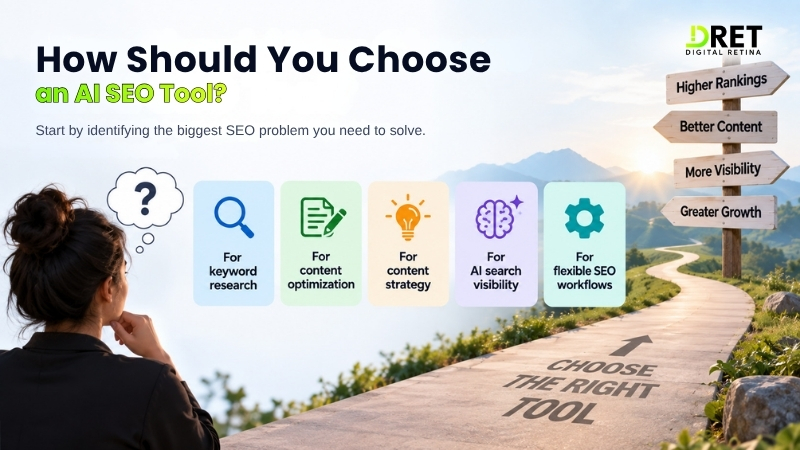
How Should You Choose an AI SEO Tool?
Start by identifying the biggest SEO problem you need to solve.
-
For keyword research: Consider Ahrefs, Semrush or SE Ranking.
-
For content optimization: Consider Surfer, Clearscope or Frase.
-
For technical SEO: Screaming Frog is a strong specialist option, while Semrush and other all-in-one platforms can cover broader requirements.
-
For content strategy: MarketMuse, Clearscope and Frase can help organize topic planning and content opportunities.
-
For AI search visibility: Consider tools such as OtterlyAI, Ahrefs Brand Radar or Semrush's applicable AI visibility solutions.
-
For flexible SEO workflows: ChatGPT and Perplexity can support research, analysis and content workflows when paired with reliable data.
Also consider pricing, usage limits, integrations, team access and how much of the platform you will actually use. Paying for ten features and using only two is not necessarily better than choosing a focused tool that solves the specific problem well.
Are Free AI SEO Tools Enough for Beginners?
Free AI SEO tools can be enough for beginners who are learning SEO or managing a small website.
Google Search Console can provide first-party information about search performance, while Google Trends can help with topic and interest research. Screaming Frog's free version can crawl up to 500 URLs, which can be sufficient for smaller websites.
Free versions of ChatGPT and Perplexity can also support research and content workflows, although usage limits and feature availability vary.
Paid tools become more useful when you need larger keyword databases, competitor analysis, automated rank tracking, large-scale crawling, advanced content workflows or dedicated AI visibility monitoring.
Can AI Replace SEO Professionals?
AI can automate and accelerate parts of SEO, but it does not remove the need for SEO judgment.
An AI tool can help identify patterns, cluster keywords, generate an outline or summarize a large dataset. It does not automatically understand a company's commercial priorities, customer behavior, competitive context or conversion goals.
The strongest SEO workflow therefore combines AI automation with human strategy, data validation and editorial judgment.
FAQs About AI SEO Tools
What are the best AI SEO tools in 2026?
The best AI SEO tool depends on the task. Semrush and Ahrefs are broad SEO platforms, SE Ranking combines SEO and AI-search tracking, Surfer and Clearscope focus on content optimization, Screaming Frog specializes in technical SEO, and OtterlyAI focuses on AI search visibility.
What are the best AI SEO tools for keyword research?
Ahrefs, Semrush and SE Ranking are useful options for keyword research. ChatGPT can also help cluster and organize keyword data, but keyword volume and ranking decisions should be validated using reliable SEO data sources.
What are the best AI tools for SEO content optimization?
Surfer, Clearscope and Frase are content-focused options for SEO optimization. ChatGPT can support outlining, rewriting and analysis, but it should not replace search-intent research or editorial review.
Are AI SEO tools useful for Google AI Overviews?
Yes. AI SEO tools can help with the underlying SEO work and, depending on the platform, monitor visibility in AI search experiences. However, Google has indicated that existing SEO fundamentals remain important for AI Overviews and AI Mode. There is no separate optimization process that replaces core SEO.
Are free AI SEO tools good for small businesses?
Free AI SEO tools can be useful for small businesses, especially when combined with Google Search Console, Google Trends and free versions of tools such as Screaming Frog, ChatGPT or Perplexity. Paid software becomes more valuable as keyword, crawling, reporting and AI visibility requirements increase.
Final Takeaway
The best AI SEO tools in 2026 are not necessarily the platforms with the most AI features. The right choice depends on the SEO problem you need to solve.
For broad SEO management, Semrush, Ahrefs and SE Ranking provide extensive capabilities. For content optimization, Surfer, Clearscope and Frase are more focused. Screaming Frog SEO Spider is useful for technical audits, while MarketMuse supports content strategy. ChatGPT and Perplexity can support research and analysis, and tools such as OtterlyAI and applicable Semrush or Ahrefs capabilities can help monitor AI search visibility.
The most effective approach is to use AI SEO tools to process data, automate repetitive work and uncover opportunities while keeping human judgment responsible for strategy, validation, quality and business decisions.
Ready to Implement These Strategies?
Our team of digital marketing experts can help you navigate these trends and create a winning strategy.